


双色球
新电商,如何让好产品从黑土地“火”到云端?,新电商,如何让好产品从黑土地“火”到云端?_我的网站

一 |
Chinese lawmakers began reviewing a draft law on combating cross-border corruption on Tuesday, a legislation which experts believe would help close legal gaps in investigating overseas corruption, pursuing fugitives and recovering illicit assets, while strengthening international cooperation and corporate compliance.
The draft was submitted for its first reading to the ongoing session of the Standing Committee of the National People's Congress, the country's top legislature, per Xinhua News Agency.
Huo Zhengxin, a professor at the China University of Political Science and Law, told the Global Times that the draft law represents a dedicated piece of legislation within China's anti-corruption legal framework and a major step forward in the country's law-based governance of foreign-related affairs. It will fill a legislative gap in combating cross-border corruption, Huo said.
As Chinese companies expand business overseas, cross-border corruption cases face challenges in obtaining evidence abroad, pursuing fugitives and recovering illicit assets. Existing anti-corruption laws have faced limitations in addressing such cases involving foreign affairs, making such dedicated legislation necessary, Huo said.
Structured into six chapters and 47 articles, the draft sets out the principles, scope and key provisions underpinning China's efforts to combat cross-border corruption. It also defines relevant operational mechanisms and institutional responsibilities, and seeks to strengthen case handling and international cooperation.
The draft further clarifies enterprises' obligations regarding integrity and compliance, and specifies legal liabilities for violations.
As one of the experts involved in drafting the legislation, Huo said a key innovation of the draft is to strengthen international cooperation and corporate integrity and compliance obligations. As evidence, suspects and illicit assets in cross-border corruption cases are often located overseas, the draft provides mechanisms including extradition, mutual legal assistance and repatriation, while aligning with relevant rules under the UN Convention against Corruption (UNCAC), said the expert.
The draft also makes clear that Chinese companies operating overseas, including both state-owned and private enterprises, have legal obligations to uphold integrity and compliance with domestic laws, Huo said.
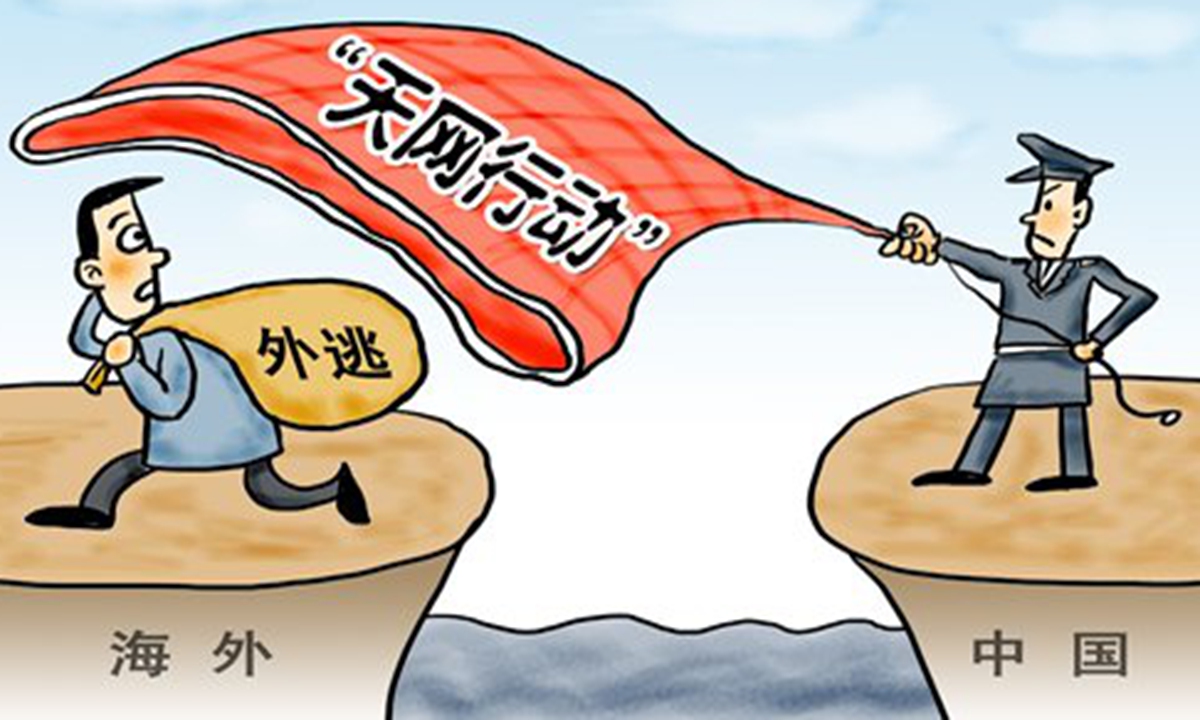
The legislation would also codify practices accumulated through China's past campaigns against cross-border corruption, such as Sky Net and Fox Hunt operations, turning them into a more systematic legal framework and strengthening the law's deterrent effect, according to Huo.
The draft law is a practical step to regulate the development of cross-border businesses and help build a world-class business environment aligned with market principles, the rule of law and international standards, Xinhua noted.
It is also expected to expand the legal tools available to combat cross-border corruption and help address challenges in detecting corruption, collecting evidence, recovering illicit assets and securing convictions, according to the report.
In January, CCTV News reported on the case of a former senior executive of China National Offshore Oil Corporation, who was accused of accepting large amounts of bribes that were concealed overseas, with a businessman allegedly acting as a "front" to collect the illicit payments.
The draft's explicit corporate integrity and compliance requirements would make it harder for individuals to disguise bribery and other corrupt practices through overseas projects in an attempt to circumvent domestic oversight, while further clarifying the extraterritorial reach of China's anti-corruption laws, Huo said.
The draft also contains provisions to counter the use of foreign countries' domestic anti-corruption laws to exercise "long-arm jurisdiction" over Chinese companies, which Huo described as another important innovation in China's foreign-related legal framework.
China has been deepening its efforts in international anti-corruption cooperation, with 963 corrupt fugitives repatriated to the country in 2025, according to a work report from the country's top anti-graft body, Xinhua reported.
。

二 | 聚力数智赋能 焕新电商未来 新电商,如何让好产品从黑土地“火”到云端? 皓月牛肉、长白山人参、吉林大米、延边煎饼、集安白桃…… 据国家统计局数据,1-7月全国网上商品和服务零售额增长4.8%。 提到电商,过去人们总想起杭州、广州、义乌等地,但在全国范围内,吉林也在不断强势崛起! 吉林,坐拥世界黄金玉米带、长白山资源宝库和全国优质肉牛产区,这片黑土地从不缺少好物。 但好产品如何卖出好价钱?如何从区域特产变成全国网红? 一批批本土龙头企业借力新电商,完成了从传统农业到品牌农业的华丽转身。 一头牛的“数据分析” 在长春皓月集团的仓库里,工人正在紧张打包发货。

三 | 这家始建于1998年的民营股份制企业,是首批国家级农业产业化重点龙头企业,现有员工5500多人。 然而,真正让“皓月”在电商时代站稳脚跟的,是一套用大数据重构的备货逻辑。

四 | “皓月”电商营销部负责人王玉介绍,他们集团在2015年布局电商,至今已有11年电商运营经验;团队可利用大数据分析用户地域、消费层级、客单价、消费频次等维度信息,以此精准储备成品、半成品及原辅包材。“大数据可提供约90%的决策参考,有效降低备货失误,系统还在持续完善。

五 | ” 目前,皓月电商营销部有48名工作人员,每日直播16小时。在达人合作方面,一方面通过平台官方渠道对接主播,另一方面依靠政府资源搭桥,今年7月“与辉同行”吉林专场活动中,皓月在吉林特产销售中排名第一。 一株参的“破圈”之路 如果说皓月靠的是数据驱动的精准决策,长白山人参产业集团的突围路径则是“产品年轻化”与“数字溯源”的双轮驱动。 “一参一码追溯系统,就是给人参办‘身份证’,让消费者吃上‘定心丸’。”长白山人参产业集团副总经理迟娜在采访中说,在长白山地理标志保护区域内,集团布局了1000余公顷的道地种植养殖基地,覆盖永吉、通化、柳河等核心产区,严格遵循GAP标准培育林下参、园参等品种。 每棵人参都被赋予唯一标识码,扫一扫即可查到产地、年份、等级、检测机构等全部信息。这套系统背后,是物联网、云计算、大数据、区块链等技术的集成应用,确保从种苗到采收全程可视化管控。 迟娜提到,企业的核心打法是“产品年轻化”,把人参从“药材”变为“日常消费品”。目前,该集团已开发出近400款产品,覆盖传统滋补、创新即食、功能饮品、护肤日化四大品类。 这种“零食化”改造精准击中了年轻消费者的需求。仅人参蜜片一款单品,年销量就达50万盒,换算成片数超过千万片。 如今,长白山人参在天猫、京东、拼多多、唯品会、抖音、快手、视频号等平台开设了70余家店铺,实现了全网域运营。

六 | 并在直播电商领域,与多位超头部网红及MCN展开合作,日生产、发货单量达万单以上。

七 | 线下在近2000家高端渠道开设店铺、专柜,覆盖国内所有一线城市及大部分二线城市。

八 | 2026年上半年销售同比增长21.4%。

九 | 一群人的“乡情”答卷 新电商的深度不仅在于卖货,更在于带动乡村全产业链发展。

十 | 如果说皓月解决了“怎么卖得准”的问题,长白山人参解决了“怎么卖得新”的问题,那么北铺农业和“白小桃”则探索了“怎么带着乡亲一起卖”的路径。 在吉林省北铺农业科技发展有限公司的展示室里,大米、白酒、煎饼、蜂蜜……几乎涵盖吉林省所有农产品种类。这家民营企业以“集合北方优质农特产品”为定位,坚守“吉品出吉、振兴乡村”的创建初心,借助互联网销售渠道,将延边大米、四平油莎豆粉、玉米面粉、双阳煎饼、磐石灵芝、靖宇蒲公英根茶、双辽小米等众多省内特色农副产品销往全国各地。 而在集安,吉林省筱爱食品有限责任公司(白小桃)的故事更显温情。项尧伟2019年返回集安,在当时网络直播并不流行的情况下,这一举动开启了集安网络主播的新时代。 在他的团队培育下,仅2020年一年,集安共孵化主播150余人,全网粉丝突破1000万,拍摄的视频为集安地区带来3亿多人次曝光。 一次考察中,项尧伟发现果农在水果销量及推广方面一直存在较大困难,凭借敏锐的市场嗅觉和创业团队的努力,2021年,集安本土品牌“白小桃”应运而生。 如今,“白小桃”已成为集安人民最喜爱的食物之一,也是外来游客必买的赠友佳品。集安市凉水朝鲜族乡二参厂的白桃种植基地,带动解决富余劳动力就业200人/年,助销果农产品40万斤/年。

十一 | 项尧伟还与残联共同组建集安残疾人电商创业运营中心,开展技能培训,帮助他们掌握电商运营技能,实现经济独立。 “我始终认为接受高等教育的意义不是让我们摆脱贫困的家乡,而是帮助家乡摆脱贫困。”项尧伟说,“如果能通过白小桃系列产品走出一条属于集安的特色产业道路,那白小桃的意义才真正实现了。

十二 | ” 当前,全国各地都在巧用新电商平台,实现新突破。 从“黑土地里的产品”到“云端的爆款”,传统产业的升级本质是思维方式的重构,不是把旧东西卖得更贵,而是用新方式让更多人愿意买。 随着“吉品吉递”等物流品牌的落地和新电商大会的持续赋能,吉林农业也正乘“云”而上。迎来从“产得好”向“卖得俏”全面跃迁! 记者:孔令辉 来源:中国吉林网。
Current article:http://z2io.cousizhegaobaolengkuo.bond/7jvu/pyy.html
Published on:12:25:15