
雷霆扫毒
扩大中国电信ESIM试点城市范围:增加武汉/深圳_我的网站

一 |
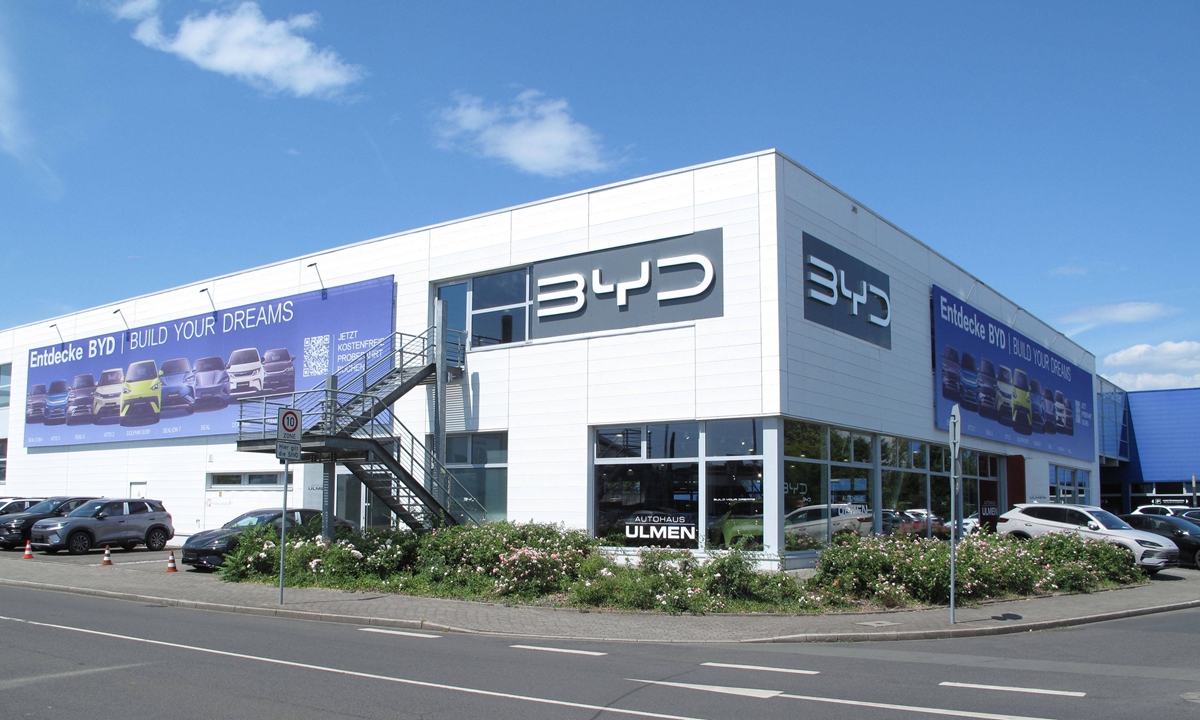
Germany's industrial woes have increasingly become a hot topic of discussion. The latest Engineer Monitor report from professional association Verein Deutscher Ingenieure and the German Economic Institute offers a new look at the issue.
The report showed that there were 58,392 unemployed individuals in the engineering and information technology (IT) professions in the fourth quarter of 2025, the highest level since the survey began in 2011.
Compared with the previous year, the number of unemployed increased by 16.7 percent, according to German media reports on Sunday.
These figures lay bare the challenges confronting the country's manufacturing sector. The reasons for the industrial woes are multiple. The soaring energy costs caused by geopolitical conflicts, the decline in exports caused by rising protectionism and low external demand, and the structural pain caused by industrial chain restructuring are all squeezing the space of German manufacturing.
Manufacturing is the backbone of Germany's economy, and engineers and IT specialists constitute the core force that sustains this pillar. For decades, the country's reputation for "Made in Germany" excellence was built on the expertise of these skilled professionals. Regardless of the macroeconomic ups and downs, preserving the stability and continuity of its industrial talent pool represents a strategic bottom line for Germany.
Should large numbers of highly skilled technical professionals leave the industry or sit idle, industrial research and development (R&D) and production cycles will be disrupted. Over the longer term, such a waste of human capital will erode Germany's industrial innovation capacity and, ultimately, undermine the foundations of its global competitiveness.
In this context, the urgent task for Germany is to create sufficient quality positions for its technical talent. Should it fail to do so in the short term, then Germany needs to embrace a more open‑minded development approach. Shoring up its manufacturing base cannot be achieved solely through protecting domestic companies; it also requires a significant expansion of effective investment to create enough high‑quality jobs that can attract and retain skilled talent.
This is exactly where China‑Germany cooperation could deliver tangible results. According to the FDI Report 2025 published by Germany Trade & Invest (GTAI), the total number of foreign investment projects in Germany fell 9.3 percent overall to 1,564 in 2025. Nonetheless, Chinese companies became the largest source of foreign investment projects in Germany in 2025, overtaking the US for the first time since 2017.
Chinese companies launched 228 investment projects in Germany in 2025, up 14.6 percent year-on-year. More than one in five Chinese investment projects involved production and R&D activities, above the overall average for foreign investment projects in Germany. This is a sign that Chinese firms are deepening their integration into the local industrial base, according to GTAI.
Observers noted the trend, pointing out that China is becoming an important force in driving German re‑industrialization. In industries where Germany urgently needs to rebuild its competitive edge, such as electric vehicles, batteries, energy technology, digital manufacturing, and automation, China is emerging as an increasingly significant complementary partner. In these critical areas that will determine industrial competitiveness in the coming decades, the relationship between China and Germany is not merely one of rivalry; there are clear and substantial complementarities. Germany still boasts world‑leading engineering expertise, precision manufacturing capabilities, and a strategic location at the heart of the European market.
China has complete and highly integrated supply chains for raw materials and intermediate goods and large capacity for increasing production. When Chinese automakers set up R&D centers in Germany, or when Chinese tech firms collaborate with German factories to build smart production lines, the beneficiaries are not only the Chinese companies but also the German engineers who would otherwise face redundancy.
Cross‑border investment cannot flourish without a sound policy environment. Chinese companies are apparently willing to develop in Germany, but it can only happen on the premise that the German side provides a fair, reasonable and predictable business environment, reduces non-market interference in commercial activities, and allows capital to operate in accordance with market rules.
If the two countries are able to reach a deeper level of cooperation in investment, many of Germany's trade‑related concerns may well find more pragmatic solutions. The deep integration of industrial value chains would facilitate two‑way trade, creating renewed momentum for German exports of machinery, vehicles, chemicals, and other competitive products to China.
。去年11月8日,中国电信启动了ESIM-1双终端业务试点。如果使用中国电信的移动电话号码,iPhone和Apple Watch将能够实现相同数量的发送或访问。当时,电信在上海、广州、南京、成都等地开通了ESIM服务试点项目。现在,根据中国电信的最新公告,试点城市的范围扩大了,武汉和深圳也增加了。

二 | 添加ESIM附属智能设备,在主电话号码的现有账号和套餐下共享手机号码,两个终端在主电话呼叫时一起振荡,任何终端都可以拨出电话。唯一的限制是主终端和附加终端不能互相呼叫。手表和手机共享资源,如手机号码包和流量包。对于与此功能兼容的Apple设备,电信要求手机为iPhone 6或更新版本,并已将系统升级至iOS 12.1;手表支持Apple Watch Series 4和Series 3的GPS蜂窝网络版本;手表硬件要求国有公司运行WatchOS 5.1.1或更新版本系统。
Current article:http://z2io.cousizhegaobaolengkuo.bond/qovve/20260826/815.html
Published on:09:10:00
我的网站相关阅读
- 冲突再度升级,为何股市还逆势修复走强?
- 中欧一合作,美国就捣鬼,半导体汽车层层加码
- 抖音购入手表存在质量问题走时不准,平台客服推诿不予处理售后
- 邮件群发是什么?一文看懂邮件群发工具
- 2025淘宝京东618活动时间已经开始到6月20日结束, 6月16日晚8点将是优惠力度最大
- 济南森林公园不仅有绿意,还有书香
- Exclusive: "He Never Increased His Fee Even After Any Blockbuster" - Subhash Ghai on Dharmendra
- Dhurandhar Box Office Day 3: Ranveer Singh's Film Crossed Rs 100 Crore Mark
- 萨纳西斯:76人4星都需要有球在手 才能在比赛中打出高效表现
我的网站最新文章
- 存储界的大满贯!中科曙光斩获四大市场第一:AI连续三年领跑
- 外线有谱!波杰姆斯基半场三分4中2拿到6分3板 正负值+10
- Oscars 2026: Vishal Jethwa Comments About Homebound Getting Shortlisted
- 这十年,奥运给伦敦留下哪些遗产
- 华强北终结者?iOS 16支持检测假冒AirPods,网友:买假不如买好_耳机_正品
- 2025粤港澳车展:增程/纯电动力 搭载HUAWEI ADS 4 尊界S800亮相
- 国防部:“台独”死局演不赢、改不了
- 远东股份:远东电气拟收购富的旺旺合计80%股权
- Russia mounts largest assault in months in eastern Ukraine
- “红”“蓝”争冠格局不变——2022-2023赛季英超前瞻
- 每体:拉科鲁尼亚阵容仍需完善,阿达玛·特劳雷接近加盟
- 最高法修改著作权民事纠纷司法解释,增强可操作性
- 中国氢弹之父余敏,享年93岁。
我的网站随机推荐
- 济南新学期周历发布!秋季开学时间为9月1日,2027年寒假、暑假时间也明确了
- 杭州PVC市场弱势盘整
- 哈兰德用中文更新动态:喜提短发,其标志性飘逸长发变寸头,女友看到捂脸大笑,直呼“Oh my God”
- 加密货币交易所Coinbase聘用德国金融企业高管:扩张欧洲业务
- 政声直达丨河北林下经济利用林地面积达872万亩
- WTI原油期货价格跌幅扩大至3%
- Olaf Scholz Mocked Online After Coming Clean On His Showering Habits
- 过量输液对健康有害:吉林省几家医院已宣布取消成人普通门诊输液。
- 辽宁省基本实现省市县三级政府法律顾问全覆盖
- 闲鱼
- 马瑟林潜在去向曝光 鹈鹕是目前最积极的追求者
- 英菲尼迪纯电动SUV将展出,真正的汽车和内饰将提前在星空图书馆曝光。
- 七成本科毕业生意向升学,需要注意什么